
Buying a property is one of the biggest financial decisions in life. Whether you are purchasing a home for personal use or investment, verifying legal documents is crucial to avoid future disputes, fraud, or financial loss. Many buyers ignore legal checks in excitement, which can lead to serious complications later.
In this guide, we’ll walk you through how to check property legal documents before purchase and ensure a safe and secure transaction.
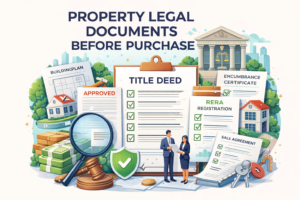
1. Verify the Title Deed
The Title Deed is the most important document in any property transaction. It proves the ownership of the property.
What to check:
- Name of the current owner
- Ownership history (chain of ownership)
- Seller’s legal right to sell the property
Ensure the title is clear and marketable, meaning there are no disputes or claims on it.
2. Check the Encumbrance Certificate (EC)
An Encumbrance Certificate confirms that the property is free from any legal or financial liabilities such as loans, mortgages, or disputes.
Key points:
- Verify EC for at least the last 10–15 years
- Ensure there are no pending dues or claims
- Check all transactions recorded on the property
A clean EC ensures that the property has no hidden legal issues.
3. Confirm RERA Registration
In India, under-construction properties must be registered with the Real Estate Regulatory Authority (RERA).
Why it’s important:
- Ensures transparency
- Protects buyers from fraud
- Provides project details like completion timeline
Always verify the project details on the official RERA website before investing.
4. Verify Approved Building Plan
Make sure the property has an approved building plan from the local municipal authority.
Check for:
- Proper approvals
- No illegal construction
- Compliance with local regulations
Unauthorized constructions can lead to penalties or even demolition.
5. Check Land Use Permission
Confirm whether the land is approved for residential use.
Types:
- Residential land
- Agricultural land
- Commercial land
If agricultural land is being sold as residential, proper conversion certificates must be available.
6. Occupancy Certificate (OC)
An Occupancy Certificate is issued by the local authority after verifying that the building complies with approved plans and is safe for occupancy.
Why it matters:
- Confirms legal construction
- Required for utility connections
- Important for resale value
Avoid buying property without an OC, especially in ready-to-move projects.
7. Completion Certificate (CC)
A Completion Certificate confirms that the project has been completed as per approved plans.
Check:
- Construction matches approved layout
- No deviations from original plan
This document is essential for newly constructed properties.
8. Verify Sale Agreement
The Sale Agreement outlines the terms and conditions between buyer and seller.
Key elements:
- Total price and payment schedule
- Possession date
- Penalties for delays
- Included amenities
Read the agreement carefully before signing to avoid hidden clauses.
9. Check Property Tax Receipts
Ensure that all property taxes have been paid by the seller.
Why it’s important:
- Confirms legal ownership
- Avoids future liabilities
Ask for the latest tax receipts and verify them with local authorities.
10. Verify Utility Bills
Check electricity, water, and maintenance bills.
Ensure:
- No pending dues
- Bills are in the seller’s name
Unpaid dues may become your responsibility after purchase.
11. Check Identity of Seller
Always verify the identity of the seller to avoid fraud.
Documents to verify:
- Aadhaar Card
- PAN Card
- Passport (if applicable)
Make sure the seller matches the name on the title deed.
12. Power of Attorney (if applicable)
If the property is being sold through a Power of Attorney (PoA), verify its authenticity.
Important checks:
- PoA is legally registered
- Seller has the authority to sell
Avoid dealing with unverified PoA transactions.
13. Home Loan Approval (Bank Verification)
If a property is approved by a bank for home loans, it adds an extra layer of verification.
Why it helps:
- Banks conduct legal and technical checks
- Reduces risk for buyers
However, don’t rely solely on bank approval—do your own verification too.
14. Society Documents (For Flats)
If you are buying a flat, check society-related documents.
Important documents:
- Share certificate
- Society NOC (No Objection Certificate)
- Maintenance records
These confirm that the property is legally part of the housing society.
15. Hire a Legal Expert
Property documentation can be complex, especially for first-time buyers.
Benefits of hiring a lawyer:
- Professional document verification
- Identification of hidden risks
- Legal guidance during registration
This small investment can save you from major losses.
16. Check for Pending Litigation
Ensure the property is not involved in any legal disputes.
How to check:
- Visit local court records
- Ask the seller for declarations
- Consult a legal expert
Buying disputed property can lead to long legal battles.
17. Verify Physical Property Details
Always match legal documents with the actual property.
Check:
- Property size and layout
- Boundaries
- Location details
Any mismatch could indicate fraud or illegal construction.
18. Registration Process
Ensure the property is properly registered in your name.
Steps:
- Pay stamp duty and registration charges
- Register property at sub-registrar office
- Collect registered sale deed
Registration legally transfers ownership to the buyer.
Common Mistakes to Avoid
- Skipping legal verification
- Trusting verbal promises
- Ignoring encumbrance details
- Not checking approvals
- Rushing the purchase decision
Avoiding these mistakes ensures a safe investment.
Conclusion
Verifying property legal documents is not just a formality—it is a critical step in protecting your investment. A clear title, proper approvals, and verified documents ensure that your property purchase is safe, legal, and hassle-free.
Take your time, do thorough research, and consult professionals when needed. A careful approach today can save you from financial and legal troubles in the future.